Choosing a medium shouldn’t feel confusing, yet many people find themselves comparing different terms without really understanding what they mean.
A medium is someone who believes they can serve as a link between the physical and spirit worlds, sharing messages they receive during a reading. While many people have heard of mediumship, not everyone understands the mediums or how each one works.
This guide explains the different kinds of mediums in clear, straightforward language, so you know what to expect before arranging a reading.
Read Here
How Do Psychic Readings Work and What Can You Expect?
What Is Medium?
People often use the words medium and psychic interchangeably, but they describe different abilities. A psychic usually focuses on the living, offering insight into a person’s life, relationships, or future possibilities. A medium, on the other hand, focuses on connecting with loved ones who have passed away and sharing the messages they receive during a reading.
Many mediums spend years developing their abilities through regular practice, study, and experience. Like any skill, mediumship takes time to refine. That’s why it pays to look past the first search result when you’re hunting for spiritual mediums and check how much genuine experience someone actually has. An experienced medium also understands the importance of approaching every reading with honesty, sensitivity, and respect, rather than making unrealistic promises.
A psychic usually offers insight into your current life, relationships, or future possibilities. If you’re looking for a psychic reading rather than spirit contact, this is the type of session to book. A medium focuses on passing on messages from loved ones in spirit. A Medium clairvoyant receives information through mental images, often helping them describe people, places, or memories that carry meaning for the person they’re reading.
The Main Types of Mediums
Although every medium works in their own way, the different types of mediums are generally grouped by how they receive and share information during a reading.
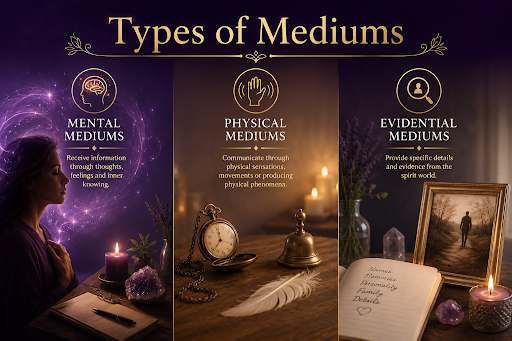
The three main categories are mental mediumship, physical mediumship, and evidential mediumship.
Mental Mediums

Mental mediumship is the approach used in most modern private readings. Instead of looking for physical signs, the medium focuses on the thoughts, images, feelings, and impressions they receive during the session. Many experienced mediums use one or more of the following intuitive abilities, often called the “clairs.”
Clairvoyance (Clear Seeing): A medium may receive images, symbols, or brief mental pictures that help describe a person, place, or memory connected to a loved one in spirit.
Clairaudience (Clear Hearing): Rather than hearing a physical voice, a medium may become aware of words, names, phrases, or sounds in their mind during a reading.
Clairsentience (Clear Feeling): A medium may sense emotions, physical sensations, or the personality of someone in spirit, helping them better understand the message being shared.
Claircognizance (Clear Knowing): Sometimes, information comes as a strong inner certainty without the medium seeing, hearing, or feeling anything first. They simply know a detail and then share it with the person receiving the reading.
Some mediums also describe experiencing abilities such as clairalience (clear smelling) or clairgustance (clear tasting), although these are less commonly reported than the four core clairs.
Physical Mediums
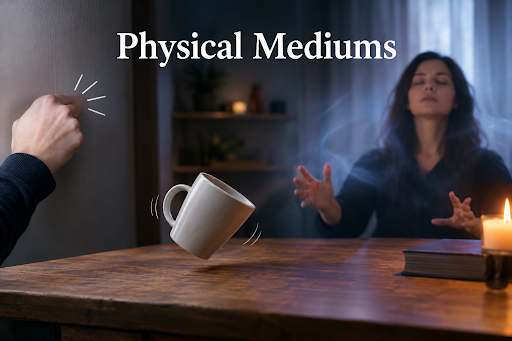
Physical mediumship focuses on reported physical phenomena rather than information received mentally. Examples may include sounds such as knocks or raps, movement of objects like table tipping, or forms of trance or channeling described within some spiritual traditions.
This form of mediumship is considered rare, and experiences can vary widely. It’s sensible to approach claims of physical mediumship with an open mind as well as healthy scepticism, as genuine practitioners avoid making extraordinary promises.
Evidential Mediums
Evidential mediums aim to provide specific details that the person receiving the reading can recognise and verify. These details might include names, shared memories, personality traits, family relationships, or other meaningful information rather than broad or general statements.
For many people, this approach feels especially reassuring because the focus is on offering evidence that helps support the connection being made. Rather than relying on vague messages, evidential mediumship seeks to provide details that have clear personal meaning for the sitter.
Medium vs Clairvoyant vs Psychic – What’s the Difference?
You might find one practitioner calling themselves a psychic, another a clairvoyant, and another a medium, even though they may use many of the same abilities during a reading.
The difference comes down to what they’re focusing on, not necessarily the skills they have.
A psychic usually offers insight into your current life, relationships, or future possibilities. A medium focuses on passing on messages from loved ones in spirit. A clairvoyant receives information through mental images, often helping them describe people, places, or memories that carry meaning for the person they’re reading.
In practice, these labels aren’t fixed. An experienced medium may naturally use clairvoyance alongside other intuitive abilities, such as clear hearing, clear feeling, or a strong inner knowing. That’s why many readings don’t fit neatly into just one category.
As an experienced clairvoyant in Dorset, Elaine Astin combines mediumship with intuitive guidance to provide readings tailored to each individual.
How to Choose the Right Type of Medium for You
Choosing a medium doesn’t have to be complicated. Focus on finding someone whose approach matches your needs and makes you feel comfortable.
- Decide whether you’re seeking spirit communication, personal guidance, or both.
- Choose your preferred format: in-person, phone, or online readings
- Look for a medium with a trusted reputation and genuine client feedback.
- You should feel comfortable, respected, and never pressured to book a reading.
Which Type of Medium Should You Try First?
There’s no single “right” type of medium to start with. The best choice depends on what you’re hoping to gain from the experience and what makes you feel most comfortable.
If you’re looking for everyday guidance or reassurance, mental mediumship is often the easiest place to begin. Its conversational style makes it easier for many people to understand and relate to.
If you’re hoping for specific, meaningful evidence, evidential mediumship may be a better fit. The aim is to provide details that hold personal meaning rather than broad or general messages.
If you’re curious but still unsure, consider starting with a shorter phone or online reading. It can help you understand how a reading feels before committing to a longer session.
Remember, the different types of mediums are only part of the experience. Just as important is choosing someone whose approach makes you feel comfortable, respected, and free to ask questions before your appointment.
Finding the Right Reading for You
A good medium reading should never feel rushed, forced, or built on unrealistic promises.
What matters most is finding an approach that feels genuine and makes you feel comfortable, respected, and free to ask questions.
Elaine Astin brings years of experience combining mediumship with intuitive guidance, offering readings focused on clarity and genuine connection. Find Out More about booking a session with Elaine.
Also Read
What Is a Spiritual Medium? Everything You Need to Know
What Is a Spiritual Medium and What Do They Do?
Frequently Asked Questions
Q1. Can anyone become a medium, or is it a natural gift?
Most mediums develop their abilities through years of practice and study, though many describe having a natural sensitivity to begin with.
Q2. Do all mediums use the same method to receive messages?
No, mediums often rely on different abilities such as clairvoyance, clairaudience, or clairsentience, and many use a combination of these during a reading.
Q3. Why do some mediums give very specific details while others speak more generally?
This usually comes down to their approach. Evidential mediums focus on specific, verifiable details, while others may share broader impressions or feelings.
Q4. Is it normal for a medium not to receive a message from a specific person?
Yes, spirit communication can’t be guaranteed, and a message not coming through doesn’t reflect on the medium’s ability or the reading itself.
Q5. Can a medium also be a clairvoyant or psychic at the same time?
Yes, many practitioners naturally combine these abilities, which is why readings don’t always fit neatly into just one category.